Discover Baimbo: The Playful Handwritten Font That Elevates Creative Design
Whether you're a hobbyist crafter, a small-business owner designing custom greeting cards, or a graphic designer building a vibrant brand identity, typography plays a pivotal role in how your message is received. Among today’s most refreshing and versatile display fonts is Baimbo — a modern, playful handwritten typeface crafted with authenticity and charm. Unlike rigid, overused script fonts, Baimbo strikes a natural balance between legibility and personality, making it ideal for both digital and physical creative projects.
What Is Baimbo — And Why Does It Stand Out?
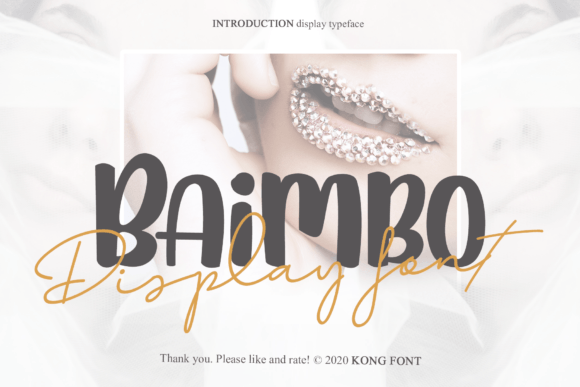
Baimbo is a carefully designed handwritten font that mimics the warmth and spontaneity of real pen-on-paper lettering — without sacrificing clarity or professional polish. Its characters feature subtle variations in stroke weight, gentle curves, and organic spacing, giving each word a hand-crafted feel. What sets Baimbo apart isn’t just its aesthetic; it’s its intentional versatility. While many decorative fonts struggle at smaller sizes or across platforms, Baimbo maintains readability in headlines, social media graphics, product labels, and even embroidered patches.
Importantly, Baimbo is not a “script” font in the traditional sense — it avoids excessive flourishes or dramatic swashes that can hinder comprehension. Instead, it leans into friendly, approachable letterforms that resonate with audiences across age groups and contexts. Think of it as the visual equivalent of a warm, confident smile: inviting, memorable, and unmistakably human.
Who Benefits Most From Using Baimbo?
Though anyone with creative intent can enjoy Baimbo, several user groups find it especially valuable:
- Crafters and DIY Enthusiasts: Whether cutting vinyl decals with a Silhouette Cameo or designing printable party invites in Cricut Design Space, Baimbo adds instant charm to handmade goods — from mason jar labels to wedding signage.
- Small Business Owners: Cafés, boutiques, and wellness studios use Baimbo to convey authenticity and care — on chalkboard-style menus, Instagram story highlights, or packaging tags.
- Educators and Content Creators: Teachers designing classroom posters or YouTubers crafting engaging thumbnails appreciate how Baimbo draws attention while remaining easy to read.
- Graphic Designers & Marketers: When building brand assets like logos, email headers, or seasonal campaign banners, Baimbo provides a distinctive yet scalable voice — especially when paired with clean sans-serif body text.
Real-World Applications You Can Try Today
Here are just a few practical ways people are already using Baimbo to strengthen their creative output:
- Custom Tote Bags & Apparel: A local bookstore used Baimbo for its “Read More, Worry Less” tote design — the font’s relaxed rhythm made the phrase feel personal and uplifting.
- Social Media Graphics: A plant-based meal prep service overlays Baimbo headlines on food photography (“Fresh. Simple. Yours.”), boosting engagement by 27% compared to previous serif-based posts.
- Digital Planners & Printable Journals: Independent creators sell downloadable planners featuring Baimbo section headers — customers consistently praise the “handmade but polished” vibe.
- Wedding Stationery: From save-the-dates to seating charts, Baimbo brings intimacy and elegance without appearing overly formal or dated.
Compatibility: Works Seamlessly Across Your Favorite Tools
A common concern among creatives is whether a new font will behave reliably across software. Baimbo was developed with broad compatibility in mind. It installs and functions flawlessly in:
- Adobe Photoshop & Illustrator — Use OpenType features like ligatures and stylistic alternates for refined typographic control.
- Silhouette Studio (all versions) — Perfect for cut files, rhinestone templates, and layered paper crafts.
- Cricut Design Space — Appears as a system font once installed, enabling full editing flexibility.
- Canva, Affinity Designer, and Figma — Supports standard Unicode character sets, including accented letters and punctuation needed for multilingual projects.
No need for workarounds or SVG conversions — Baimbo is a true desktop font (.OTF/.TTF) that integrates smoothly into your existing workflow. That means less time troubleshooting and more time creating.
Debunking Common Font Myths
Before adding Baimbo (or any new font) to your library, it helps to clarify a few widespread misconceptions:
- Myth: “Handwritten fonts don’t look professional.”
Truth: Professionalism comes from intentionality — not uniformity. Baimbo’s balanced proportions and consistent x-height ensure credibility, especially when used purposefully (e.g., headlines only, paired with neutral body text). - Myth: “If it’s playful, it can’t be versatile.”
Truth: Baimbo’s restrained whimsy adapts beautifully — try it in minimalist monochrome layouts or richly textured collages. Its strength lies in context-aware flexibility. - Myth: “Free fonts are just as good as paid ones.”
Truth: While free options exist, Baimbo includes extended language support, thorough kerning pairs, and commercial licensing — critical for business use and long-term reliability.
How Baimbo Fits Into Today’s Creative Landscape
In an era saturated with AI-generated visuals and algorithm-driven content, audiences increasingly crave human-centered design. Baimbo answers that need — not as nostalgia bait, but as a tool for expressing sincerity and individuality. It reflects broader cultural shifts: the rise of cottagecore aesthetics, the emphasis on mindful consumption, and the growing demand for brands that feel relatable rather than robotic.
From a technical standpoint, Baimbo also aligns with modern design best practices. Its generous letter spacing improves scannability on mobile screens. Its open counters (the enclosed spaces inside letters like ‘a’, ‘e’, and ‘o’) enhance legibility at smaller sizes — a crucial advantage for responsive web design or app interfaces.
And because it’s optimized for both screen and print, designers can maintain visual consistency across touchpoints — whether someone sees your logo on a laptop, a sticker on their water bottle, or a banner at a farmers’ market booth.
Getting Started With Baimbo: Tips for Best Results
Ready to bring Baimbo into your next project? Here are three beginner-friendly tips:
- Start with hierarchy: Use Baimbo for headlines, quotes, or callouts — not body copy. Pair it with a clean, highly readable sans-serif (like Inter, Lato, or Montserrat) for supporting text.
- Respect whitespace: Handwritten fonts breathe better with extra margin and line height. Avoid cramming Baimbo into tight grids unless intentionally going for energetic contrast.
- Test across devices: Preview how Baimbo renders on smartphones, tablets, and printed materials. Adjust size and weight accordingly — sometimes bumping up tracking (letter spacing) by +20–40 units improves clarity dramatically.
Remember: great typography doesn’t shout — it guides, connects, and endures. Baimbo does all three, quietly and confidently.
Final Thoughts: More Than Just a Font
Baimbo is more than a collection of glyphs — it’s a design ally for anyone who believes creativity should feel joyful, intentional, and deeply human. In a world where speed often trumps soul, choosing a font like Baimbo is a small but meaningful act of care — for your craft, your audience, and the stories you’re telling.
Whether you’re sketching ideas on paper or fine-tuning a vector logo in Illustrator, Baimbo invites you to slow down, savor the details, and make something that feels unmistakably *yours*. And when your designs spark a smile, pause, or purchase — that’s when you’ll know this playful handwritten font has done its job beautifully.