Broken Home: A Sweet Script Font for Joyful Designs
If you’ve ever scrolled through a font library and paused at one that feels like sunshine in typeface form—you’ve probably just found Broken Home. It’s not a nostalgic relic or a dramatic display font. It’s a modern script font with gentle curves, airy spacing, and a quiet confidence that makes it both approachable and refined.
What Makes Broken Home Stand Out?
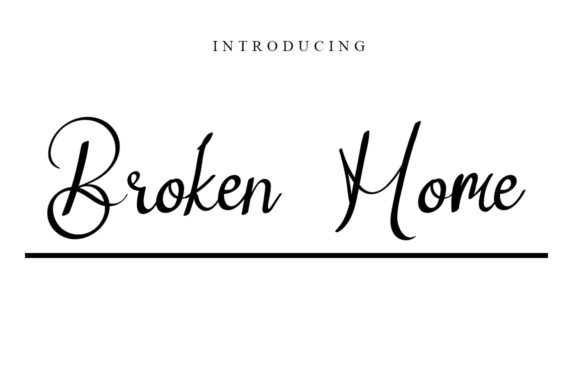
Broken Home is a beautiful and sweet script font—fresh, clean, and elegant. Its letterforms flow naturally, like handwriting done with care and calm. There’s no forced flair or exaggerated swash; instead, it balances softness with structure. The lowercase ‘a’, ‘g’, and ‘y’ have subtle, friendly shapes. Uppercase letters carry just enough presence to command attention without shouting. And because it’s carefully spaced and well-kerned, it reads clearly even at smaller sizes—something many script fonts struggle with.
This isn’t just another decorative typeface meant for one-off headlines. Broken Home works across contexts because it’s designed with versatility in mind. It’s joyful without being childish, graceful without feeling distant, and personal without sacrificing polish.
Where Does Broken Home Shine?
Think about the moments when tone matters as much as text: a wedding invitation that whispers romance, a handmade soap label that feels warm and trustworthy, or a boutique café menu that invites you to linger. That’s where Broken Home steps in—not as background noise, but as a thoughtful voice in your design.
For small business owners, it adds warmth to branding without losing professionalism. A yoga studio might use it for class schedules or workshop posters. A freelance photographer could feature it on their portfolio site’s “About” page to reflect calm creativity. Educators crafting classroom handouts or digital newsletters find it helps soften formal content while keeping it legible and inviting.
Digital creators love it too. Bloggers use Broken Home for featured quote graphics or Instagram story highlights. Social media managers apply it to Canva templates for announcements, seasonal promotions, or client thank-you cards. Even email subject lines—when used sparingly in image-based headers—gain personality and memorability.
Real-Life Uses You Can Try Today
- Printed goods: Wedding stationery, baby shower invites, recipe cards, greeting cards, and artisan product labels all benefit from its gentle charm.
- Digital interfaces: Use it for hero section headlines on websites, blog post titles, or animated social media banners—just pair it with a clean sans-serif for body text to ensure readability.
- Branding elements: Logos, monograms, or signature lines in brand guidelines gain distinction and warmth when Broken Home is applied thoughtfully.
- Educational materials: Teachers designing welcome packets, student certificates, or classroom decor find it encourages engagement without distracting from learning goals.
One practical tip: Broken Home shines brightest when given room to breathe. Avoid cramming it into tight columns or pairing it with overly busy backgrounds. A light background, generous line height, and minimal surrounding decoration let its elegance speak for itself.
Things to Keep in Mind Before You Use It
Like any script font, Broken Home works best when matched to the right purpose—and used with intention. It’s not ideal for long paragraphs, legal disclaimers, or data-heavy tables. Its strength lies in short, meaningful phrases: names, quotes, headings, callouts, and titles.
Also consider your audience. While its sweetness appeals broadly, some industries—like finance, law, or enterprise tech—may prefer more neutral typography for core communications. That doesn’t mean Broken Home can’t play a supporting role there (e.g., in an internal team newsletter or a values statement graphic), but context guides how far you can lean into its personality.
Technical notes matter too. Broken Home is typically delivered as a standard OTF or TTF file, so it installs easily on Mac and Windows. Most design tools—including Adobe Creative Cloud, Canva, Figma, and Affinity apps—support it out of the box. Just remember to embed it properly if sharing editable files with clients or collaborators.
Pairing It Well Makes All the Difference
A great font pairing lifts Broken Home without competing with it. Try it with a friendly sans-serif like Poppins, Lato, or Nunito for contrast that feels balanced and intentional. For print projects, a classic serif like Merriweather or Playfair Display offers timeless harmony. The goal isn’t contrast for contrast’s sake—it’s creating visual rhythm that supports your message.
You’ll also want to test how Broken Home renders across devices. On mobile screens, slightly larger sizes and bolder weights (if available) help preserve its character. And if you’re using it in web projects, check loading performance—hosting it locally or via a trusted font service ensures fast, consistent display.
Why It Feels Like More Than Just a Font
Typography shapes how people feel before they even read a word. Broken Home doesn’t just look good—it creates space for kindness, sincerity, and lightness in your work. That’s especially valuable today, when so much digital communication feels rushed or transactional. Using Broken Home signals care: in how you present your business, share your ideas, or celebrate life’s small milestones.
It’s also a quiet confidence-builder for beginners. You don’t need advanced design training to use it well. Start simple—swap it in for a heading in your next newsletter, try it on a printable planner page, or use it to sign your latest watercolor sketch. Each time, you’ll notice how effortlessly it brings warmth and cohesion to your work.
Ultimately, Broken Home isn’t about chasing trends. It’s about choosing a tool that aligns with how you want people to feel when they see your words. Whether you're launching a side hustle, designing for a nonprofit, or simply making something lovely for yourself—it helps your message land with grace, clarity, and joy.